
The Supreme Court has transferred the investigation of the Malda incident, involving the gherao and attack on judicial officers, to the National Investigation Agency (NIA), citing concerns about the credibility of West Bengal's bureaucracy.

Justice Surya Kant is set to become the 53rd Chief Justice of India, bringing extensive experience and a record of significant verdicts on key issues.

The Supreme Court has urged the CBSE to reconsider the implementation of its three-language policy for Class 9 students, emphasising that children should not be subjected to undue pressure. The court highlighted concerns about infrastructure, the starting point of the policy, and the definition of 'native' languages.
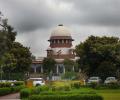
The Supreme Court has reserved its verdict on a petition challenging the Special Intensive Revision (SIR) of electoral rolls in Bihar, following arguments from various lawyers and the Election Commission of India.

The Supreme Court resumed hearing pleas challenging the Maharashtra Speaker's decision regarding the Eknath Shinde-led Shiv Sena MLAs and the Election Commission's recognition of the Shinde faction as the "real" Shiv Sena. Senior advocate Neeraj Kishan Kaul, representing the Shinde camp, argued that the EC has jurisdiction under Article 324 to examine a party's democratic character and organisational structure, especially when the Thackeray faction's constitution was not registered with the poll panel. He emphasised that the Shinde faction's case is based on a split within the political party, not just its legislative wing, citing cadre discontent. The hearing remains inconclusive.

The Supreme Court has questioned the amended constitution of the Shiv Sena, observing that it appeared to have made the party 'virtually a one-person structure' and raising concerns about democratic functioning within political parties.

The Supreme Court granted bail to Suhail Ahmad Thokar, arrested under UAPA for allegedly conspiring with terrorist groups to recruit terrorists and radicalise youth after the repeal of Article 370.

The Supreme Court, hearing pleas on the Shiv Sena split, observed that a political party retains control over its legislature wing and its valid decisions must prevail, but also advocated for granting 'elbow room' to elected representatives for political decisions if a majority 'genuinely disagree' with party directions.

The Supreme Court is set to hear a batch of petitions on July 13 seeking a fair and time-bound probe into the alleged embezzlement of donations at the Ram temple in Ayodhya, with petitioners requesting a CBI investigation and a CAG audit of the temple trust's finances.

The Uddhav Thackeray-led faction of the Shiv Sena told the Supreme Court on Tuesday that the Election Commission's (EC) determination as to which group constitutes the political party should come after a decision on the disqualification proceedings against the MLAs, who have deserted their camp.
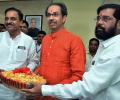
The Supreme Court is deliberating whether a split in the Shiv Sena could originate in the legislature party and then extend to the broader organisation and primary membership, as it hears pleas from the Uddhav Thackeray faction challenging the Election Commission's recognition of the Eknath Shinde-led faction.

The Uddhav Thackeray faction has told the Supreme Court that the Election Commission's decision to recognise the Eknath Shinde-led unit as the "real Shiv Sena" and grant it the 'bow-and-arrow' symbol was unlawful. Senior advocate Kapil Sibal argued that a split in a legislature party cannot, by itself, amount to a split in the political party, challenging the very basis of the poll panel's jurisdiction and its disregard for the party's 2018 constitution.

The Supreme Court of India has strongly criticised comedian Samay Raina and YouTubers Ranveer Allahbadia and Ashish Chanchlani for failing to comply with its previous order regarding disability awareness. The court expressed dismay over Raina's non-compliance and his alleged insensitive remarks about persons with disabilities, urging the Centre to consider a stringent law against such derogatory comments.

The Supreme Court of India dismissed a Public Interest Litigation (PIL) seeking safety measures for tourists in remote hilly areas of Jammu and Kashmir, criticizing the petitioner for seeking publicity without a genuine public cause. The PIL was filed in response to a terror attack in Pahalgam that killed 26 people, mostly tourists. The court stated that the petitioner had a history of filing similar PILs primarily for publicity.

The Supreme Court has quashed all FIRs against students who participated in the Cockroach Janta Party-led protests, stating the cases should not affect their future, while the government affirmed its commitment to youth welfare.

The Supreme Court has directed the Reserve Bank of India to prepare a standard operating procedure (SOP) within four weeks to deal with bank accounts linked to cyber frauds, including mule accounts. This directive is part of a broader effort to strengthen responses to cyber-enabled financial frauds, with the court also urging states and UTs to adopt and operationalise grievance redressal and money restoration modules.

Modi's greater weakness is his inability since July when he directed the exit of Dharmendra Pradhan, to come up with a political counter strategy. Security measures and executive orders as seen in recent days will only likely further weaken him and make him as lame duck a premier as many prior to him, Indira Gandhi and Manmohan Singh included, observes Nilanjan Mukhopadhyay.
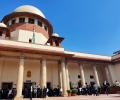
The Supreme Court has granted four weeks of protection from arrest to Bihar-based contractor Rishu Shree, who is accused of acting as a middleman in government tender manipulation. Shree is alleged to have charged commissions to facilitate contracts, with the Enforcement Directorate investigating a "larger conspiracy" involving multiple Bihar departments.

The Supreme Court has allowed podcaster Ranveer Allahbadia to travel abroad after the Assam and Maharashtra governments said the investigation against him was complete. Allahbadia, known as BeerBiceps, was booked for his comments on parents and sex on comic Samay Raina's YouTube show "India's Got Latent".

The Supreme Court has directed an appellate tribunal to expeditiously decide an appeal filed by a 75-year-old advocate challenging the deletion of his name from the West Bengal voters' list following a Special Intensive Revision exercise. The court noted the petitioner appeared to be a bona fide resident and requested a decision within two months.
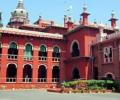
Thirty-six former judges have called on people, including parliamentarians, to denounce opposition leaders' move to impeach Madras High Court judge Justice G R Swaminathan, saying such an attempt would undermine democracy and judicial independence.

The Supreme Court has taken suo motu action in the case of a brutal assault on a woman advocate in Delhi, allegedly by her husband, and has directed the Delhi Police Commissioner to hand over the investigation to a senior police officer.
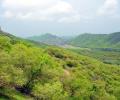
The Supreme Court has emphasised that the expert committee tasked with defining the Aravalli hills and ranges must consult domain experts and other stakeholders to ensure public input is heard.
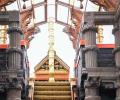
The Supreme Court observed that Hinduism is a way of life, stating that mandatory temple visits or rituals are not necessary to be considered a Hindu; even lighting a lamp at home suffices.

The Delhi Police has strongly defended its use of force during the 'Chalo Sansad' protest on July 20, telling the Supreme Court that the agitation was 'hijacked by anti-social elements and history-sheeters,' leading to law and order breakdown and over 240 police personnel injuries.
Chief Justice of India Surya Kant has recused himself from hearing petitions challenging the constitutional validity of the 2023 law regarding the appointment of election commissioners, citing a potential conflict of interest.

The lawyer for ex-judge Giribala Singh and her son Samarth Singh stated that his clients are fully cooperating in the probe into the Twisha Sharma dowry death case, a day after the Supreme Court took suo motu cognisance of the matter.

The Supreme Court of India has dismissed the use of information from 'WhatsApp University' as evidence in a case concerning religious freedom and discrimination against women at religious sites, including the Sabarimala Temple.
The Supreme Court has taken suo motu cognisance of the Twisha Sharma 'dowry' death case, citing alleged institutional bias and procedural discrepancies. The case involves the death of actor-model Twisha Sharma, who was found dead at her marital home, leading to an FIR against her husband and mother-in-law for alleged dowry harassment.

The mother of Cockroach Janta Party (CJP) founder Abhijeet Dipke on Wednesday claimed that her son had received a video threat coercing him to join the Bharatiya Janata Party or face severe consequences against his family.
The Supreme Court has scheduled a July hearing for the Rs 500 crore money decree case involving Ras Al Khaimah Investment Authority (RAKIA) and industrialist Nimmagadda Prasad, following the failure of a mediation process led by former Chief Justice of India U U Lalit.
The Supreme Court of India has agreed to examine a constitutional challenge regarding gender discrimination within Parsi personal law, specifically focusing on whether a Parsi woman loses her religious identity upon marrying outside the community.

The Supreme Court has permitted the NIA to file its charge sheet upon completion of the investigation into the incident in West Bengal where judicial officers were illegally confined by a mob.
The Supreme Court has directed the CBI to submit a status report on the FIRs related to the 2023 Manipur ethnic violence and is considering having the Manipur or Gauhati High Courts monitor the trials.

Supreme Court judge Justice B V Nagarathna has cautioned against the over-reliance on Artificial Intelligence (AI) in the judiciary, emphasising the need for judicial independence from algorithmic influence. She stressed that AI should only serve as a tool and not replace human judgement, which is guided by legal reasoning, constitutional values, and a deep sense of justice.

The Supreme Court has stated that a complete ban on pellet guns is not possible as long as existing advisories permit their use for crowd control in exceptional circumstances by security agencies. However, the court clarified that allegations of specific misuse can be examined on a case-by-case basis, particularly in light of recent protests against the NEET paper leak.

The Supreme Court has taken exception to AIIMS' plea to set aside its order allowing a 15-year-old rape survivor to terminate her 30-week pregnancy, urging the Centre to amend the law to permit abortion beyond 20 weeks in such cases.
The Supreme Court has dismissed a plea from a Dubai-based businessman seeking consolidation of 24 criminal cases against him, emphasising the need for a victim-centric judicial approach.

The Supreme Court has clarified that 'criminal antecedents' for NEET paper leak protesters refer only to grave and heinous offences, allowing state governments to withdraw FIRs against students not involved in such serious crimes. This comes after the Centre's commitment to not pursue cases against most protesting students.
Supreme Court judge Justice B V Nagarathna stated that judicial independence in the modern era includes freedom from algorithmic influence, emphasising that AI should only assist judges, who must ultimately decide based on constitutional values and human judgment.
